Monday, 28 July 2014

1854 - The Railways Go to War

Whilst, quite rightly, the role of the Railways in this the centenary of the outbreak of the Great War and 75 years from the outbreak of World War 2, has been stressed as the unsung hero of both conflicts, it is 160 years since the Railway went to War.


In March 1854 the unlikely alliance of Britain and France declared war on Russia, starting what was to later be known as the Crimean War. Often described as the first 'modern, inudstrial' war, the Crimean War saw the first mass use of the railways to move troops and materiel but also in the warzone itself.

In the build up to  hositilities in the Crimea, men, horses and supplies were moved by rail. When the Scots Greys - a cavalry regiment - marched from their barracks in Nottinghim to Liverpool (via Manchester) the men and horses went by foot, but their baggage  was sent by rail, via Chesterfield, Matlock, and Buxton. When the 7th (Royal Fusiliers) Regiment of Foot left its barracks in Mancehster, it did so in ten trains chartered from the LNWR, 150 men per train. Some 3,000 tons of forrage from horses was despatched from Leeds by rail before being put on board ship and sent out to the warzone.

One of the most audacious plans for the railways involved sending the entire British cavalry force (the 'Heavy' and 'Light' Brigades, totalling around 2,000 horses) all the way accross France using the newly opened PLM (Paris à Lyon et à la Méditerranée) railway. Over 100 wagons and specially-contructed horse-boxes were collected in Calais for this monumental task.  The backers of this scheme positted that sending the cavalry by rail was quicker than sending them by sea to Marseilles, safer and would prevent the horses from 'dropping off in condition'. Sadly, it was cancelled at the last minute due to protests from communes in the South of France who, with memories stretching back 40 years), did not want to see British troops marching through their villages.

The failure of the British supply system (Commissariat) became a national scandal which brought down the Coalition Government of Lord Aberdeen in the new year of 1855. In order to remedy the crisis at the front, Messrs. Peto & Brassey of London - the famous railway contractors - volunteered to build a railway in the war zone and at their own cost! It became known as the 'Grand Crimean Central Railway.'

Initially worked by horses and stationary engines on incline planes, the line was relaid with heavier rails and the more severe inclines avoided so that steam locomotives could be used.

The first steam locomotive to go to war was the 'Alliance'.  'Alliance' was an 0-6-0 tank engine, built in Leeds by E. B. Wilson & Co. and had been volunteered by  Sir John Lister Kaye who used her on his colliery railway near Wakefield (now the National Coal Mining Museum). Alliance was re-fitted in Leeds, fitted with armour plate and 'Her iron sides adorned with the English, French Turkish and Sardinian flags conspicuously painted thereon.'

She was soon joined by a sister engine, 'Victory', in September 1855 after the fall of Sebastopol.   A further three locomotives were sent out: two from the LWNR and the fith, called 'Swan' from the St Helens' Railway.

After peace was declared on  30 March 1856, the railway was sold piecemeal at auction.


Friday, 25 July 2014

The Battle of Kanghil


From the Souvenirs of Lieutenant-Colonel le Vicomte de Bernis, 6th Dragoons


"The 29th September, the general d’Allonville has three columns in movement. They left Eupatoria at three o’clock in the morning. The first, directed to the south-east, towards the Lake Sasik, by the sea was to take position by Sak. There, they met a few Russian squadrons, but they were easily dealt with by the fire from two gunboats. The second column, commanded by Muchir Pacha, advanced towards Doltchak which they ruined during their passage to deny provisions to the enemy. The general d’Allonville is at the head of the third column, composed of twelve squadrons from his division, and the horse artillery battery of captain Armand. Two hundred Bachi-Bazouks preceded them; and attached were six Egyptian battalions. They marched for Chidan by way of Doltchak, where they would rendezvous with the two other columns, and they were reunited around ten o’clock in the morning. They had before them and  had to shoot at enemy squadrons that were successively calling up their reserves. There were eighteen squadrons of Uhlans, several Cossack squadrons and artillery. They maneuvered by withdrawing and seemed to be prepared to turn our right, to come between the lake and us.

Tuesday, 22 July 2014

Captain Nolan


The enigmatic Captain Nolan


Captain Louis Edward Nolan was one of the most famous cavalry officers of his day, having served in - and trained by - the Austrian Army and with the British army in India. His two books on cavalry were forthright and forward thinking, but yet – probably thanks to Tony Richardson’s 1968 film ‘Charge of the Light Brigade’ - he is depicted as hot-headed villain of the piece; indeed Mark Adkin (‘The Charge’) has gone so far as to suggest that the Charge of the Light Brigade was the deliberate act of Nolan. So who was Captain Nolan?

Monday, 26 May 2014

Letters from the Light Brigade


Published 30 June 2014, price £25.00

On the 25th of October the enemy advanced, and stormed our advanced positions on some hills, which were well fortified, and unfortunately occupied by the Turks, but the rascals fled before the Russians came within 150 yards of the forts; our artillery came up, and the Russians recovered the guns, where we were exposed to shot and shell for upwards of two hours, but the positions were lost, we slowly retired a short distance. The Russians advanced direct on to us, on the ground of our camp. Our heavy dragoons were ordered to charge them and they fled, although their numbers were sufficient to overwhelm our handful of cavalry. At this time, the Light Brigade formed up on the left, on some ground which commanded a long valley about two miles long, at the end of which the enemy retired. By some misunderstanding, we were ordered to advance and charge the guns, which they had formed up full in our front at the extreme end, and here took place a scene which is unparalleled in history. We had scarcely advanced a few yards, before they opened on us with grape, shot and shell. It was a perfect level, the ground only enough for the 17th and 13th to advance, the rest of the brigade following. To our astonishment, they had erected batteries on each side of the hills, which commanded the whole valley; consequently, a dreadful cross-fire opened on us from both sides and in front, but it was too late to do anything but advance, which we did in a style truly wonderful, every man feeling certainly that we must be annihilated. Still we continued on, reached the very guns, charged them, took them; but, there being no support, we were obliged to retire, almost being cut up. Out of our regiment, we assembled only ten men mounted, and one or two officers… I escaped – thank God! – without a scratch; but my poor horse got shot through the head and in the hind quarters, and a lance was through my shoe bag. It was a most unwise and mad act. One thing, there is no blame attached to the Earl of Cardigan, for he was ordered to do it, and he did it most noble. We charged up to the very mouth of the guns, and since then the 17th and ourselves have scarcely been able to make one squadron between us. The 4th Light Dragoons are nearly as bad. The Earl is very cut up contemplating it, and points it out to the officers as the effect of charging batteries. The daring of the thing astounded and frightened the enemy. (Letter from a Sergeant of the 13th Light Dragoons to his parents in Stockport Stockport Advertiser (1 December 1854), p. 4.)


Presented here for the first time in 160 years are letters home from the men of the British Cavalry involved in the Crimean War, the culmination of thousands of hours of research by Crimean War historian, Anthony Dawson.

  
There will be a Book Launch at the historic Westgate Chapel (Unitarian) on 2nd July at 7.30 – which will also include wine, nibbles and a display of Crimean War artefacts. Admission is free.


Thursday, 6 February 2014

Was there a battle plan for the Alma?

The answer, undoubtedly is yes.

The overwhelming body of evidence from French sources, from Le Marechal Saint-Arnaud down to a Capitaine of Infantry, suggests that indeed there was a battle plan for the Alma, a plan which, according to Le General Bosquet, would have been effectively a re-play of Austerlitz.


The Plan.

The traditional English language historiography of the Alma, which originates with the report of W H Russell ot The Times and Kinglake's vitriolic defence of Raglan suggests that the Allies fought their own separate battle, which was, of course, won by the English despite the French. But this is not true.

Saturday, 25 January 2014

The Author and the Zouave

Le Capitaine Richard records the following 'Curious Incident' which took place the Barracks of New France (Caserne de Nouvelle-France) where the Officers of the Zouaves de la Garde had their mess.
 

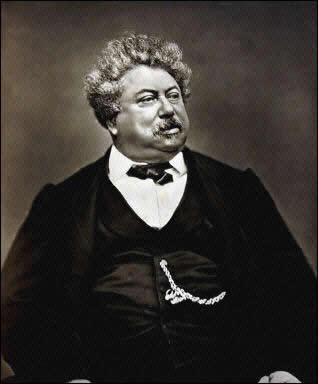
"The Capitaine Adjutant Major Petit, who conversed with Alexandre Dumas, one day whilst walking in a boulevard, invited him to dinner, with no ceremony. Dumas accepted. The Captain shortly spoke to the Colonel Lacretelle to warn of the coming of the illsutrrious novelist and  also to warn all officers. But the band was playing that evening, taking its turn of duty,  at the  dinner of the the Emperor. However, a reception without music is a wedding without violins, so the Adjutant-Major went to the Tuileries to change the tour of duty of the band of the Zouaves. But it was impossible! It is too late, musicians from other regiments were already scattered out of their barracks en route to the various theaters of the capital, where they almost invariable played in the orchestras.

In the Mess

 Inspired by his visits to the Mess of the British Household Troops at Windsor, le Colonel Fleury introduced the British-style 'Mess' first to the Regiment des Guides, and then to the Imperial Guard. The introduction of the Mess sytem to the Imperial Guard fostered - as it did in Britain - a tight bond between the Officers and a far greater Esprit de Corps than in the Line. Officers of the Guard were also encouraged to behave as 'gentlement' and were therefore allowed to marry: something considered undesirable for an officer of the Line. The Officers of the Guard were to set an example of 'Good conduct' to the rest of the Army. The Mess system and privileges such as being allowed to marry were intended to be aspirational. In reality, the Guard cut itself off from the Line, thinking itself better, jealously guarded its privileges leading to the Line harbouring resentment toward it.


Marcel de Baillehache, who enlisted as a volunteer in the Lanciers de la Garde left a striking impression of the mess in his memoires. 

"The Colonel Beville invited us to Dinner at Saint-Germaine where the Officers had the mess, situated in the Avenue de Boulingrin, in a very beautiful brick and stone house in the style of Louis XIII... one noticed a large 'N' carved in the stone above the door. ...

This Mess of the Guard was very superior , and the service left nothing to be desired. The servants were very numerable, in the most part men from the Regiment, wearing a sky blue livery with gold buttons and, on the day of a Grand Reception or a Gala, wore short white breeches, white stockings and buckled shoes.  At the time to eat, a servant would stand by the doors and the Maitre d'Hotel, dressed all in black, would advance in front of them an announce 'Le Colonel et ces messieurs a service.'"